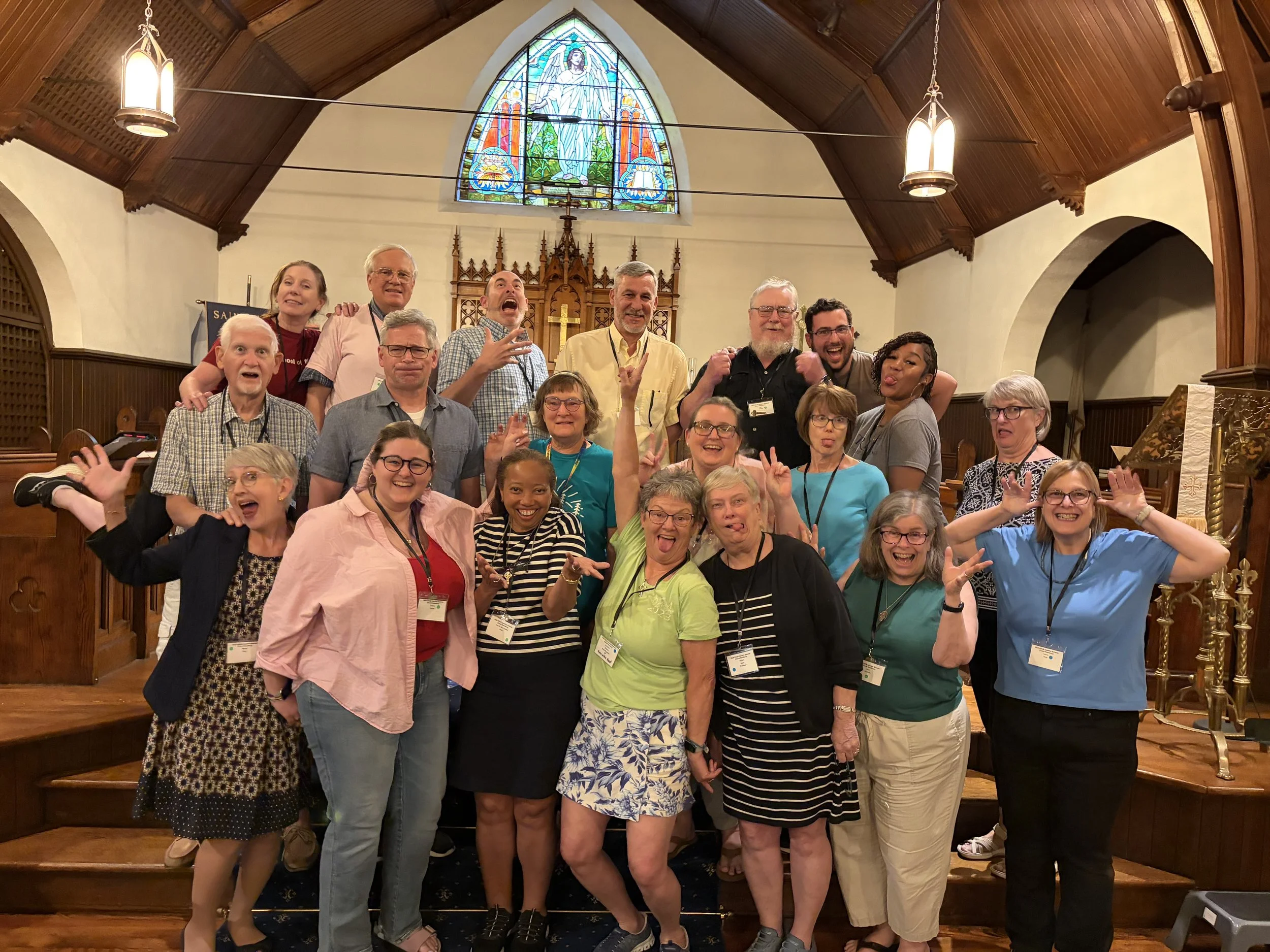
2026 Royal School of Church Music Carolina Course Summer Residency
The School of English Church Music was founded in 1927 on the initiative of Sir Sydney Nicholson, then organist of Westminster Abbey, as a training college for church musicians (the College of St. Nicolas) and as an association of affiliated churches committed to attaining high standards of musical performance. In 1945, by command of King George VI, the SECM became the Royal School of Church Music (RSCM). When the College of St. Nicolas was closed in 1974, the RSCM then concentrated its efforts on short courses.
Today, the RSCM has grown to become an international and ecumenical organization with more than 11,000 affiliates in the United Kingdom, United States, Canada, Australia, New Zealand, South Africa, Nigeria, and throughout Europe. In 2006, the RSCM moved its administrative center to Salisbury, and its office is located within Sarum College, a Christian ecumenical college in Salisbury’s cathedral close. The RSCM’s extensive publications are managed by Norwich Books and Music. The RSCM exists to enable church music and musicians to flourish, thereby bringing people closer to God in worship and encouraging church communities to grow.
In the United States, Duke University Chapel serves as the administrative home for the Royal School of Church Music in America. This arrangement, created in 2020, gave the RSCM-A a base of operations at a major research university with a vibrant sacred music program. “The music of the church shapes our imaginations about who God is and who God calls us to be,” said the Rev. Dr. Luke A. Powery, dean of Duke Chapel, in announcing the agreement. “This partnership with RSCM America moves the Chapel forward in learning from, and contributing to, a global canon of sacred music.”
In the United States and in the United Kingdom, parishes and cathedrals with chorister programs are almost always affiliated with the RSCM, which provides pedagogical structure. Through their Voice for Life training books and singing awards, choral curriculum is developed which is turn supports a thriving musical community within a parish or cathedral.
Emmanuel has supported choristers in various ways since the 1950s, largely dependent on the musical leadership. The chorister program was at its strongest during the tenure of Alan Reed, 1986-1996.
When I was hired at Emmanuel in 2010, I was unaware of the Royal School of Church Music, its traditions, or its history at Emmanuel. The season of a vibrant RSCM program had passed. It was Tucky Thompson, who had had an affiliation with the RSCM at Emmanuel during Alan’s tenure, and had served as registrar for the Carolina summertime training course for many years, who began to teach me about the RSCM.
There was so much to rebuild and do in those days. The funding sources for chorister programming didn’t exist, the financial support for funding summertime course participation had to be reestablished, the musical infrastructure, in particular, the organ and pianos, all required replacement. It was a season of building.
Today, Emmanuel supports a group of dedicated and talented choristers that sing the soprano line of our choral offerings. They rehearse on Wednesday afternoons and enjoy great friendship, while developing their musical skills. Each summer, through the support of the Drake Fund, our choristers are provided the opportunity to deepen their musical abilities through underwritten participation in one of the four summertime courses affiliated with the Royal School of Church Music in America.
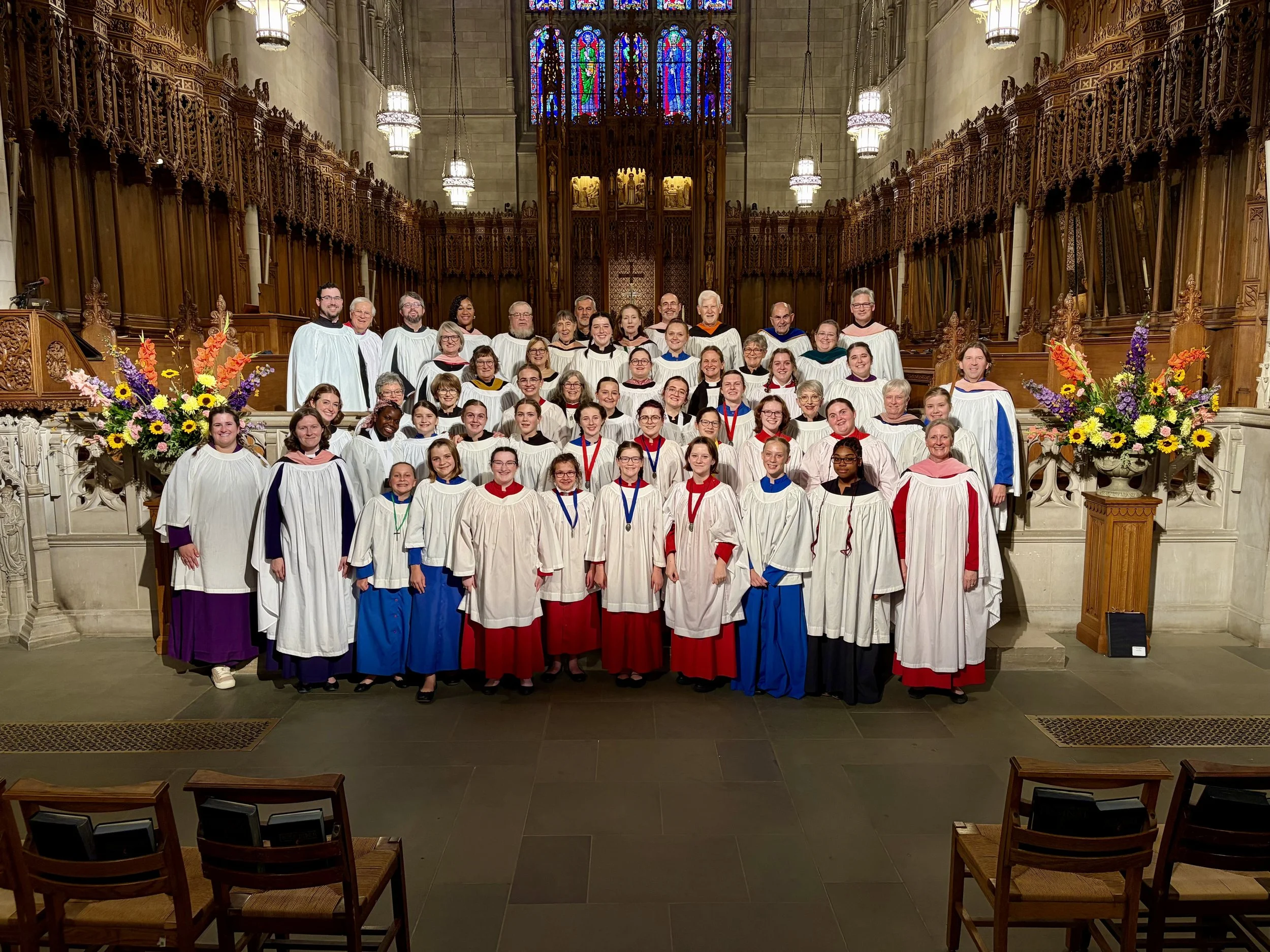
This June, three of our choristers attended the RSCM-A course hosted at St. Mary’s School in Raleigh. Through the week, our choristers attended daily Eucharist or Morning Prayer, spent five to six hours in rehearsal, attended daily Choral Evensong, and then participated in Compline before bedtime. The girls of the course develop sincere and lifelong friendships as they spend a week preparing cathedral-level repertoire, in preparation for offering the fruits of their labors at the 11 A.M. Eucharist and the 4 P.M. Choral Evensong held at Duke Chapel.
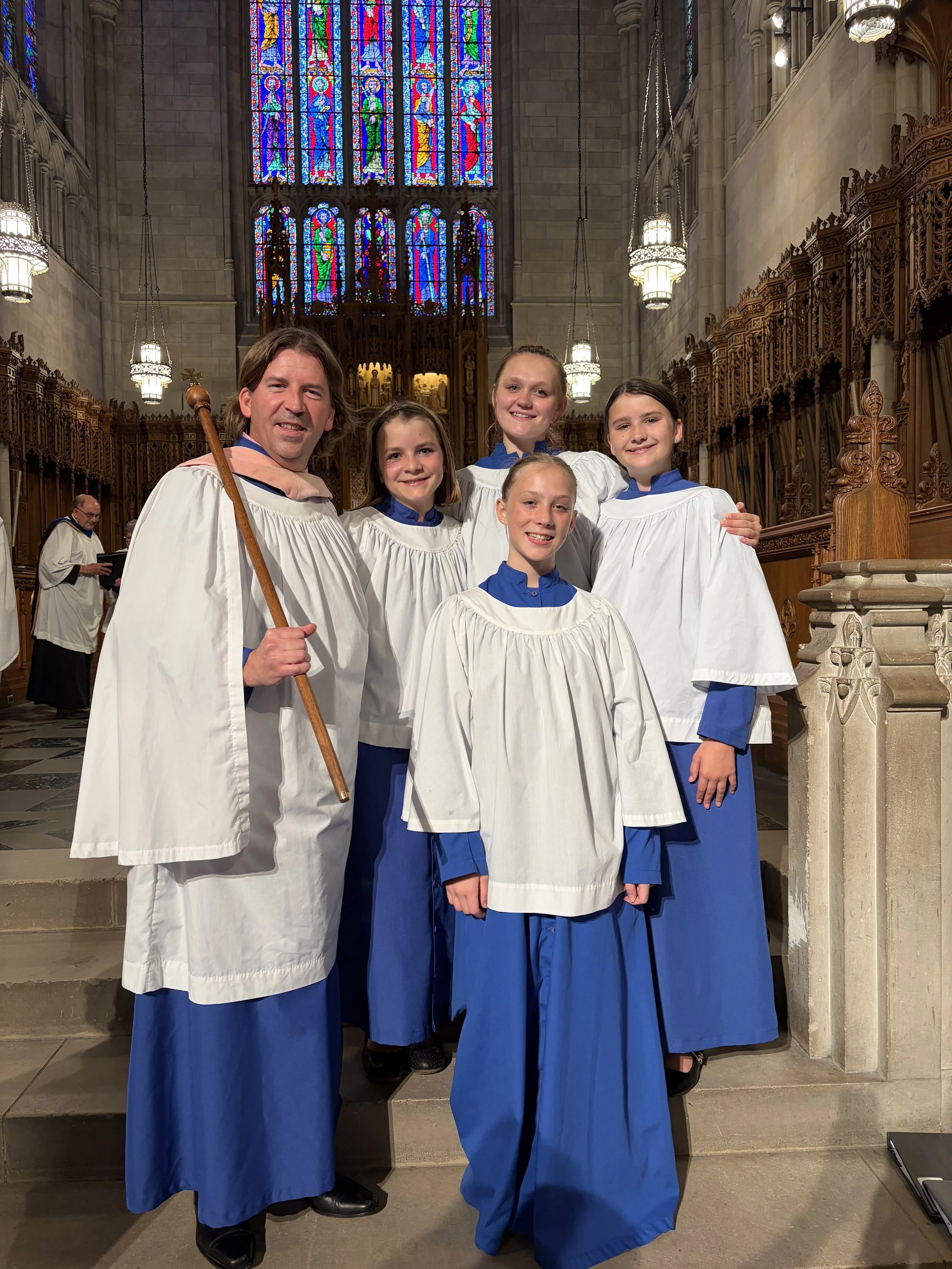
I have been blessed to serve on the faculty of the RSCM-A Carolina Course in 2016, 2019, 2022, 2023, 2024, 2025, and 2026. This year, in addition to my duties as the Adult Proctor and Verger, I served as the Adult Housemaster. My responsibility in that role was to train and rehearse the adults who sing the alto, tenor, and bass parts, for the Sunday repertoire. The adults consist of professional musicians, volunteer choir members, and oftentimes clergy. This year, the Right Rev. Dr. Dorothy Wells, Bishop of the Diocese of Mississippi, was one of my adult choristers. While we had never met before this year’s course, we learned that we shared many meaningful connections. Following our final adult rehearsal on Thursday evening, the bishop led us in Compline in the choir of St. Mary’s Chapel. It was a beautiful and holy moment.
If you would like to learn more about the Royal School of Church Music, you can visit the following sites:
Royal School of Church Music - https://www.rscm.org.uk
Royal School of Church Music in America - https://www.rscmamerica.org
If you would like to experience the glorious music offered at Duke Chapel from this year’s Carolina course, I invite you to view the archived services here:
11 A.M. Eucharist at Duke Chapel –
https://www.youtube.com/live/w9G3ZbaorvE?si=QNguWeuvGvzdGnDB